







Below, Darcey Steinke shares five key insights from her new book, This Is the Door: The Body, Pain, and Faith.
Darcey has written for over thirty years about the body and all its complexity. Her writing has appeared in the New York Times, The Paris Review, and Granta, among many other outlets. She has taught at Columbia University School of the Arts, New York University, Princeton University, and the American University of Paris.
What’s the big idea?
Suffering is unavoidable. If we are bound to feel pain, we should make the most of its hidden value. The circumstances that hurt our bodies can be doorways to deciphering new things about ourselves and life’s greatest questions.
Listen to the audio version of this Book Bite—read by Darcey herself—in the Next Big Idea App, or buy the book.


1. How can we be worthy of our suffering?
Dostoyevsky famously wrote, “There is only one thing in life I dread, not to be worthy of my suffering.” My book explores the ways that people have tried to understand their pain, be that through creative work, religion, or extending themselves to others.
When I was in the worst months of my back pain, having to stand all day at my kitchen counter, I pondered this question. And I came to believe that while pain should be minimized, if at all possible, I might also find ways to use my suffering in an effort to open myself up to others.
2. Pain is inevitable and important.
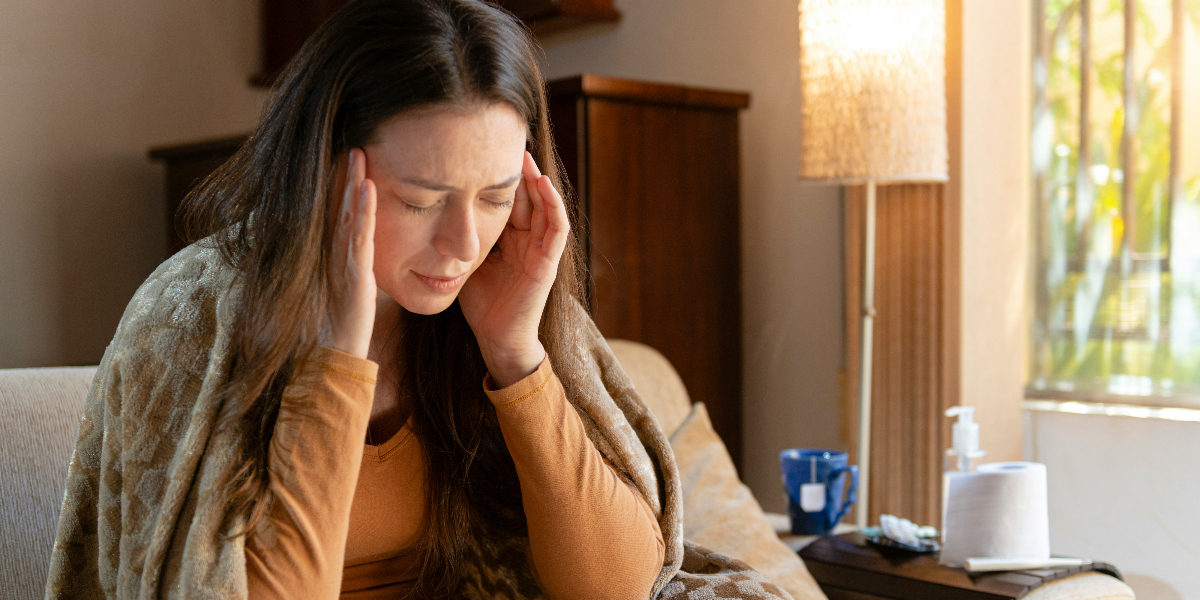
All of us will eventually have pain, whether it be short-lived or chronic. There is no way to live a pain-free life. Pain points to something extremely profound: it allows us to go deeper and identify unseen parts of ourselves.
“All of us will eventually have pain, whether it be short-lived or chronic.”
I think of Frida Kahlo, who suffered from terrible back pain. When committed to her bed, she painted her own image over and over again, trying to see who she was in her rawest, most authentic state.
Pain, like death, clears away the artificial and the fake and lets us see ourselves and our world more clearly.
3. Early books about the body made a place for the mystical, the fantastic, and the soulful.
As I worked in the rare bookroom at the New York Medical Academy in NYC, I realized how the medical books of the past, like William Harvey’s 1628 treatise on the heart, made a place not just for the body, but also religion, wonder, and myth. I tried in my book to include some mythical medicine but also ideas of the body’s relationship to wonder and the unknown.
In Harvey’s book, he writes about putting a fresh fertilized egg in warm water and watching how the tiny heart, no bigger than a pinpoint, appears and then disappears with each heartbeat.
4. Searching for a cure is different than searching for meaning.
I interviewed over 100 people for this book, and nearly all of them had rituals, insights, or epiphanies from their pain. One woman told me that as she waited in the car after an accident, her leg nearly severed from her hip, she finally understood what the word God meant—not a supernatural deity, but the souls of all the good people that had lived on the earth.
My student Neil, who suffered from debilitating back pain, has a secular ritual that he performs when the pain gets to be too much. He repeats the line of a favorite Steve Reich song, “He knocked on the door, but it had been sealed by the hand of God.”
5. Pain may change your belief system.
Many people disconnect from a faith system during or after a period of intense pain, but just as many grow closer to it.
“I interviewed over 100 people for this book, and nearly all of them had rituals, insights, or epiphanies from their pain.”
When I asked my father what he told the sick and dying people he ministered to as a Lutheran chaplain at Bellevue Hospital in NYC, he said vehemently, “I don’t tell them to believe anything, I just listen to their suffering.”
As my father struggled with the pain of his prostate cancer, he grew disconnected from some of his more conventional religious ideas. Near the end of his life, he told my nephew that religion might not be true, but it was often necessary and always beautiful.
I watched my dad move away from doctrine toward a theology of his body, and of the bodies of those he loved.
Enjoy our full library of Book Bites—read by the authors!—in the Next Big Idea App: