









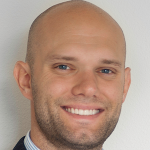


Below, Matt Kaplan shares five key insights from his new book, I Told You So!: Scientists Who Were Ridiculed, Exiled, and Imprisoned for Being Right.
Matt is a science correspondent at The Economist, where he has written about everything from paleontology and parasites to virology and viticulture over the course of two decades. His writing has also appeared in National Geographic, New Scientist, Nature, and the New York Times.
What’s the big idea?
Science often suppresses bold, unconventional, or threatening ideas due to ego, hierarchy, competition, sexism, and fraud. This culture harms progress. To truly serve society, science needs structural and cultural reform that protects integrity and encourages intellectual risk-taking.

1. Stupidly silenced.
In the middle of the pandemic, I was interviewing researchers who were trying to defeat COVID-19 or help patients in hospitals. Something that blew me away during this period was how often I would hear really impressive ideas that I thought were worth reporting on, but then the scientist would say, “Oh no, no, no. You can’t say that.” And when I asked why, these are some of the responses I got:
- “Well, other scientists wouldn’t take me seriously anymore if you shared that.”
- “I’m a PhD student and the idea I just shared with you would be a threat to the work done by my PhD supervisor. I might be fired.”
- “Well, I really need to test my idea out extensively first and I’m never going to get funding for this, so it’s not even worth talking about or reporting on.”
- “This is immunology, Matt, and let’s face it, I’m a woman.”
I thought this was nuts. We were in the middle of a pandemic with thousands of people dying, and I’ve got researchers who are saying, “Yeah, don’t share my ideas with anybody else because either my PhD supervisor won’t accept it, or other people might laugh at me, or because I’m a woman.” These are not good reasons to hide important ideas during a time when many people are losing their lives.
Has science always been like this? Have we always had behaviors like this cropping up in the field? The answer is yes.
2. Punished for thinking outside the box.
Hungarian obstetrician Ignaz Semmelweis was based in Austria at the Vienna Hospital. Most of his work entailed delivering babies all day long. He was very, very good at it, but he was also deeply troubled by the fact that numerous women died shortly after delivery. And when they died, their baby almost always died too. Semmelweis was heartbroken by this reality and wanted to understand why.
The disease was called childbed fever, and Semmelweis ran experiments trying to figure out the cause. It was killing one in 10 women after delivery. He ultimately worked out that it was the common practice of doctors visiting the morgue in the morning. Doctors were going there to dissect patients who had died the previous day because they wanted to understand why they hadn’t survived. This was important for academic learning, but it was a disaster for health.
Yes, doctors washed their hands after handling dead patients, but the soap and water mechanism did not get rid of all the deadly bacteria growing on those corpses. As a result, doctors would then go up to deliver babies, and as they went up to mothers who were in labor, they would put their fingers inside to feel for the baby’s head, sometimes move the umbilical cord from around the baby’s neck, or just generally assist in delivery. Women who were treated by doctors who had only used soap and water to wash their hands were infected with bacteria from under the doctors’ fingernails. This caused childbed fever and was almost always lethal.
“Semmelweis was ultimately fired, exiled back to Hungary, and forced into an insane asylum by his own peers.”
Semmelweis developed a technique for washing hands with a chlorine solution that removed the bacteria and effectively eliminated childbed fever. It was a huge advancement. However, when he told other doctors to follow suit, he was vigorously criticized. The other doctors said, “Sir, we are gentlemen. How dare you tell us that our hands are dirty?” Nobody had any idea about bacteria at the time, so they couldn’t look at the microscope and demonstrate that these people all had dirty hands. Semmelweis was ultimately fired, exiled back to Hungary, and forced into an insane asylum by his own peers.
Semmelweis’ story is effectively reflected by the modern Hungarian biochemist Katalin Karikó. Karikó had come to the United States as an expert in messenger RNA. She had demonstrated that messenger RNA could produce almost any protein within the body, and it could be used to develop drugs or treat diseases. Nobody believed that messenger RNA had any kind of future because whenever it entered the body, it broke apart. Karikó worked with an immunologist to demonstrate that, by using certain immune proteins on the messenger RNA, she could prevent it from falling apart inside the body and use it to help treat diseases.
Ultimately, she and immunologist Drew Weissman created the COVID vaccine when she was based at BioNTech and Pfizer, two biotechnology companies. However, before she got there, she had been demoted by the University of Pennsylvania, fired and threatened with deportation by the US Department of State. More importantly, she couldn’t get funding. Nobody believed in her research. Without her resilience, we wouldn’t have the COVID vaccine.
3. Damned lies and journal articles.
There were two rural veterinarians in France, one named Henry Toussaint and another named Pierre Galtier. They’re unknown to most people, but they shouldn’t be. Toussaint effectively invented the anthrax vaccine in 1880. Galtier paved the way for the rabies vaccine to ultimately be invented in 1881. We don’t know their names because of a certain scientist who everyone knows: Louis Pasteur.
Pasteur had worked hard to develop vaccines against both anthrax and rabies. He wanted the glory and reward for defeating both diseases. When he found out that two country-bumpkin veterinarians had effectively invented the vaccines he had been working on, he could not tolerate the notion that they would beat him to the punch. As such, he copied their techniques, lied about it, and then used his political clout with the French government to discredit and destroy both veterinarians.
What’s particularly staggering about Louis Pasteur is how history has treated him. One scholar wrote, “His skillful exploitation of the political advantages that he enjoyed show that he was, in fact, the better scientist.” Another scholar wrote, “When considering his behaviors, you have to keep in mind the highly competitive context of mid-19th century French academic life.” Are you kidding me? Does the presence of a highly competitive environment make unethical behavior in some way excusable? And we still have this problem today.
In 2023, Retraction Watch noted that almost 19,000 papers in the realm of biomedical research alone were retracted. Some retractions occur because of contamination errors or other mistakes during research, but the majority of papers retracted in 2023 were retracted for plagiarism or fraud. We cannot be operating like this.
4. Peer review or peer re-view.
Joseph Lister was working in the hospitals of Edinburgh and Glasgow during the Victorian period. During his work as a surgeon, he noted that postoperative infection was the leading cause of death after surgery. He worked out that he could prevent postoperative infection by drenching the wounds in carbolic acid and then disinfecting the surgical site with bandages soaked in the stuff during the healing process.
While his findings were initially met with cautious interest, a fellow surgeon named James Simpson whipped the medical community into an aggressive frenzy against him. This forced Lister into silence for years.
Simpson led the charge against Lister because he wanted to be the one to defeat postoperative infection first. Simpson had this theory that if you used a technique called acupressure, where you took little needles and stuck them into the wound around the surgical site, you would spread out the inflammation so that a big mass of surrounding tissue was inflamed rather than the one cutting site. He thought this would reduce the risk of postoperative infection. There was absolutely no evidence that his acupressure technique worked. Even so, being informed that carbolic acid could solve the problem he had been laboring to defeat was something he wasn’t willing to accept.
“Simpson led the charge against Lister because he wanted to be the one to defeat postoperative infection first.”
Attacking Lister was essential for the survival of his acupressure theory, and that’s exactly what he did. We still see this problem today. Scientists attack other scientists, not because their ideas are bad, but because the ideas are a threat to the territory that they’re currently exploring. We can’t have scientists shooting other scientists down just because they solved the problem first. Scientists are supposed to work together for the betterment of humanity.
5. What the heck do we do about it?
With regard to fraud, we need to develop a system for tracking down researchers who are committing fraud. If you steal money from a bank, then you go to jail. If you commit fraud with research funding, that’s effectively stealing. There is no going to jail for that right now. At best, you get fired from your job at the university. That needs to change. We need to make sure that the minority of scientists who engage in fraud are punished.
Similarly, we need to find ways to not punish scientists who have ideas that are outside the mainstream. Just because someone’s got a weird idea, if they’ve got a good reason for putting it forward and wrote a convincing proposal explaining how that idea can be explored, then we need to make funding available to them, too. We need to do this more often because, as things stand, we only fund research that is expected to work. That’s not helpful for coming up with creative solutions to big problems, like feeding eight billion people or defeating climate change.
We also need to protect scientists in vulnerable positions. Researchers who are undergraduates or PhD students are afraid that their PhD supervisors will not like the ideas they come up with. That can’t stand. If a scientist, no matter how young they are, has an idea that is contrary to the ideas found in their lab, the university, or the greater scientific community, the university needs to be prepared to roll up its sleeves and say, “We need to give this interesting idea a fair shake.” Rather than, “Boy, that’s weird. Let’s throw it out just because it’s strange.” We can’t go on like this. A culture shift needs to occur in science to make space for fresh ideas.
“We need to make sure that the minority of scientists who engage in fraud are punished.”
And finally, we need to talk about the sausage-making. The Economist has long argued against the notion that you never want to see how laws and sausages are made because the process is disgusting. Well, we need to apply that to science, too. Talking about how science functions and malfunctions is important for people to understand. People are voters. They vote to support different kinds of funding and politicians who will support different types of research efforts. The public needs to know that scientists sometimes fail—and, in fact, failure is important. If we don’t fund those scientific efforts that take a gamble, we’re rarely (if ever) going to have the big breakthroughs we need.
Enjoy our full library of Book Bites—read by the authors!—in the Next Big Idea App: